
| Connect & Subscribe |
 |
 |
 |
 |
The following is a visitor-submitted question or story. For more, you can submit your own sleep story here, or browse the collection of experiences and questions other visitors have shared here.
Can Dreams Be Causing Our 5 Year Old To Have 3 Nocturnal Seizures During REM Sleep?
We moved to a new city a little over 2 months ago. The move along with some other recent traumatic events (including an EEG which came back normal) has caused our son to have to cope with a lot of stress. We have noticed this appears to be reflected in his dreams, especially in the early mornings (REM) from approx 4:00AM to 6:30AM before he wakes up. He will often cry, yell or even laugh.
Our son has some developmental delays and sensory issues & has always been a highly sensitive child. He is also a mouth breather. In 2009 he was diagnosed with sleep apnea and had a tonsillectomy. This seemed to help him sleep better but he still breathes through his mouth. His ENT said his chin is slightly recessed and will need orthodontic help as he gets older to open up the jaw line.
The first seizure was at 6:45 AM while asleep and was approx one minute, he resumed breathing and fell back asleep. He did not foam at the mouth, turn blue or urinate.
9 day's later he had a second seizure at 4:15 AM, after recovering from an extremely stressful EEG that morning. We associated that particular seizure (which was 30 seconds) to his sleep cycle being off (to prepare for the EEG) and the stress of the test itself. The 3rd seizure was 9 days later for 30 seconds at 6:00AM. All three seizures were preceded by him making a noise as if he was having a bad dream.
He has not had another early morning seizure for almost 20 days now but he has continued to have bad dreams almost every morning. When we hear him having a dream we immediately start rubbing his back and verbally telling him that we are here, he is safe and having a dream. We are desperately trying to figure out if there is a connection between these seizures and his dreams since he never has them during the day and his EEG came back normal.
Thank you so
Kevin's Response
Thanks very much for writing in and sharing your son's story. Unfortunately I don't know much myself about nocturnal seizures and am not going to be able to give you too much input. However, I would venture to guess that your son's seizures have less to do with the content of the dreams--whether they are good dreams or bad dreams--and more about the mechanisms of REM sleep, as you hinted.I wish I had more knowledge and experience in this matter to help you more directly, but I have found a couple of articles that hopefully will be of some use to you, if you haven't already seen them.
The first is from the journal of European Neurology and is specifically about nocturnal seizures tied to REM sleep in the form of a case study of a 16-year-old boy who experienced them in the transition from REM to wakefulness. You can find the article at:
http://content.karger.com/ProdukteDB/produkte.asp?Doi=116383.
The second is a more general piece about the relationship between sleep and epilepsy written by a doctor from The Neurological Institute in New York. It's published on Epilepsy.com and the meatier bits of information that will probably be the most useful to you are found further down the page. Here's a link to the specific page:
http://www.epilepsy.com/articles/ar_1063155671
My thoughts are with you and your son. I really hope the doctors are able to make some progress and that your son doesn't have to go through many more EEGs. If I find out anything more about this, I'll be sure to let you know through updating this page.
Kevin
 Subscribe To Our RSS Feed


About This Site

Welcome! This site is continuously being created by students of Dr. William C. Dement's Sleep And Dreams course at Stanford University.
We made this site as a call to action for people all over the world to live healthier, happier, safer, and more productive lives by learning about their own sleep. We have faith that reading the information provided on this site will motivate you to be smart about your sleep deprivation and strategic about your alertness in order to live life to your fullest, most energetic potential.
In fact, we challenge you to do so! What do you say, are you up for the challenge?
Interviews With Sleep Specialists: Insights Into the Worlds of Sleep Medicine & Sleep Business
America's Most Dangerous Disorder: What Is Sleep Apnea Doing To Your Sleep?
Sleep Debt: How Much More Will You Achieve When You Reduce Yours?
The Stages Of Sleep: The Journey Through The Night
Delayed Sleep Phase: You Want To Sleep But You're Not Tired Yet
Paralyzed at Night: Is Sleep Paralysis Normal?
Sleep In Words: Smart, Strange, and Funny Quotes About Sleep
Sleep Disorders In Children: What's Keeping Your Child From A Full Night's Rest?
Attacks of Pavor Nocturnus (a.k.a. Sleep Terrors, Night Terrors, or Incubus Attacks)
A Note On Visitor-Submitted Questions:
Publishing sleep stories and questions from our visitors is meant to create a forum for open and proactive dialogue about an extremely important portion of our lives (one that occupies 1/3 of it and affects the other 2/3) that isn't talked about enough. It is not meant to substitute a trip to the doctor or the advice of a specialist. It's good to talk; it is not good to avoid consulting someone who's profession it is to help you with this kind of stuff.
If you are in any way concerned about your sleep health, don't wait for an answer on here, and don't necessarily rely on them. See a sleep specialist in your area as soon as possible.
The Stanford Sleep Book

Dr. Dement's pioneering textbook has been the core text for Sleep and Dreams since 1980, but it has just recently been made available to the wider public for the first time.
In it you'll find a more detailed account of the most important things you need to know about sleep, alertness, dreams, and sleep disorders. Studies, statistics, plus plenty of Dr. Dement's classic anecdotes painting the history of sleep medicine.
Preface | Intro | Contents | Get A Copy
More Sleep Resources
The Zeo
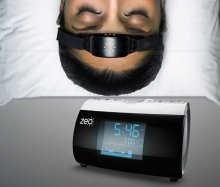

A revolution in personal sleep tracking, the Zeo is a wireless headband that transmits your brainwaves in realtime to a dock (pictured here) or your smartphone. The result? You can wake up and see exactly what stages of sleep you were in during the night! Unprecedented personalized sleep knowledge.
Sleep Paralysis: A Dreamer's Guide
Ever woken up paralyzed? A surprising number of us have, believe it or not. But few know the actual causes of this phenomenon, and fewer still how to exert control over it. Dream researcher and sleep paralysis expert Ryan Hurd shares breakthrough insights into how to do just that.
Important Disclaimer
Please Note:
The information found on this page and throughout this site is intended for general information purposes only. While it may prove useful and empowering, it is NOT intended as a substitute for the expertise and judgments of healthcare practitioners.
For more info, see our
Terms of Use.