
| Connect & Subscribe |
 |
 |
 |
 |
The Preface To The Stanford Sleep Book: A Free Preview
SSB Main | Preface | Introduction | Table Of Contents | Get A Copy
The following is the preface to the Stanford Sleep Book, the long-time textbook for Stanford Sleep and Dreams, currently in its 5th edition.
Written by Dr. William C. Dement
"America is a vast reservoir of ignorance about sleep, sleep deprivation and sleep disorders." This statement was made by the Honorable Mark Hatfield, senior United States Senator from the State of Oregon, on January 6, 1993, in the US Capitol at a press conference organized by the American Academy of Sleep Medicine to publicize the findings and recommendations of the National Commission on Sleep Disorders Research. Aside from its stunning truth, this utterance was a defining moment of validation for me because it demonstrated that at least a few national policymakers and legislators can recognize the gigantic human and dollar cost of this ignorance. Sen. Hatfield has since retired but I continue to be inspired by his memory.

One of several reasons I've become involved in educational initiatives on sleep that are somewhat off the beaten path for university professor is to save lives. I do not wish to be overly dramatic, but this is true. During the several years I served as Chairman of the Congressionally mandated National Commission on Sleep Disorders Research, the Commissions work exposed me to areas of concern that under ordinary circumstances would not have come within my purview. At public hearings, Commissioners would listen intently to the testimony of witnesses telling their stories about the many ways in which sleep deprivation and sleep disorders destroy their lives or the lives of loved ones. When I looked into the eyes of grieving parents while they were telling us about a beloved son or daughter who fell asleep driving home from college and died in a head-on collision, Sudden Infant Death mothers describing the terrible grief and pain of losing their babies, or the victims of narcolepsy describing years of failure in school due to unappreciated pathological sleepiness by perspective about my work was changed forever. I can truly understand the impact of sleep deprivation and sleep disorders on individual lives.
Through access to surveys and other types of large population studies, Commissioners can simply multiply the store is 1 million times and, by doing so, finally grasp the full magnitude of sleep-related problems in our society. Finally, the National Commission concluded that the root cause of pervasive sleep deprivation and unidentified sleep problems is the continued low level of public and professional awareness due to the failure to teach about sleep in the educational system.
From all this and more, I simply can't believe that no one can, in good conscience, sit stretch that continued to sit on the sidelines of the national awareness process. I am now on the playing field, and one result is this book on sleep, specially prepared first for students and now for the general public.
There is no tradition for the teaching of material related to sleep–its mechanisms and functions, and its impact on waking life–as part of the educational process at any level. Surprisingly, this includes a lack of adequate instruction about these issues and the pathologies of sleep even in medical schools. Given the state of affairs, there is no consensus whatsoever about what high school and college students should be taught and what the public should know, and no precedent regarding which of the scholarly disciplines is the best candidate to assume responsibility for the education of the public about sleep. In terms of the traditional academic organization of colleges and universities, the obvious homes are psychology departments and biology departments. For high schools, psychology, health education, biology, and drivers education classes are the most logical bases. The rest of the public must absorb knowledge from those of us who understand the importance of sleep and his passion to educate about sleep pushes us to reach as many as we can.
Every college and university in many high schools teach psychology. Psychology is the study of behavior and mental processes and sleep is a distinct collection behaviors and mental processes. There are even more important reasons to teach about sleep and school psychology programs. The amount of sleep that night and whether or not it is healthy fundamental and crucial determinant of daytime performance and mental activities. The full range of the dimension of waking sleepiness/alertness extends from very impaired, essentially zero function, to peak performance.
Because sleep and its impact on waking alertness and function has been totally disregarded in the educational process huge numbers of individuals are relegated to spending the daytime existence the portion of the alertness dimension furthest removed from peak performance. Moreover, even in today's technologically and medically advanced society, millions of people with sleep disorders are suffering and dying because the symptoms of their preventable and treatable illnesses are not being recognized by doctors or any other health professionals, and most important of all, remain unrecognized even by their victims. American society remains almost totally ignorant about sleep, sleep deprivation, and sleep disorders, and, as of today, I'm aware of no institution that has made sleep education a top priority. To confront this lack of systematic sleep education, this book is an attempt to provide the essentials of sleep knowledge (sleep debt, sleep need, circadian rhythms, clocked in and alerting) in a concise yet comprehensive book for the public a You arend college students alike.
~Dr. William Dement
For more information on the Stanford Sleep Book, please visit this page.
If you are interested in getting a copy of the Stanford Sleep Book, please visit this page.
 Subscribe To Our RSS Feed


About This Site
Welcome! This site is continuously being created by students of Dr. William C. Dement's Sleep And Dreams course at Stanford University.
We made this site as a call to action for people all over the world to live healthier, happier, safer, and more productive lives by learning about their own sleep. We have faith that reading the information provided on this site will motivate you to be smart about your sleep deprivation and strategic about your alertness in order to live life to your fullest, most energetic potential.
In fact, we challenge you to do so! What do you say, are you up for the challenge?
Interviews With Sleep Specialists: Insights Into the Worlds of Sleep Medicine & Sleep Business
America's Most Dangerous Disorder: What Is Sleep Apnea Doing To Your Sleep?
Sleep Debt: How Much More Will You Achieve When You Reduce Yours?
The Stages Of Sleep: The Journey Through The Night
Delayed Sleep Phase: You Want To Sleep But You're Not Tired Yet
Paralyzed at Night: Is Sleep Paralysis Normal?
Sleep In Words: Smart, Strange, and Funny Quotes About Sleep
Sleep Disorders In Children: What's Keeping Your Child From A Full Night's Rest?
Attacks of Pavor Nocturnus (a.k.a. Sleep Terrors, Night Terrors, or Incubus Attacks)
The Stanford Sleep Book

Dr. Dement's pioneering textbook has been the core text for Sleep and Dreams since 1980, but it has just recently been made available to the wider public for the first time.
In it you'll find a more detailed account of the most important things you need to know about sleep, alertness, dreams, and sleep disorders. Studies, statistics, plus plenty of Dr. Dement's classic anecdotes painting the history of sleep medicine.
Preface | Intro | Contents | Get A Copy
More Sleep Resources
The Zeo
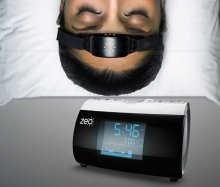

A revolution in personal sleep tracking, the Zeo is a wireless headband that transmits your brainwaves in realtime to a dock (pictured here) or your smartphone. The result? You can wake up and see exactly what stages of sleep you were in during the night! Unprecedented personalized sleep knowledge.
Sleep Paralysis: A Dreamer's Guide
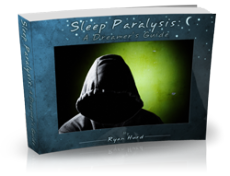
Ever woken up paralyzed? A surprising number of us have, believe it or not. But few know the actual causes of this phenomenon, and fewer still how to exert control over it. Dream researcher and sleep paralysis expert Ryan Hurd shares breakthrough insights into how to do just that.
Important Disclaimer
Please Note:
The information found on this page and throughout this site is intended for general information purposes only. While it may prove useful and empowering, it is NOT intended as a substitute for the expertise and judgments of healthcare practitioners.
For more info, see our
Terms of Use.