
| Connect & Subscribe |
 |
 |
 |
 |
Somnambulism (Sleepwalking):
Asleep With Your Eyes Wide Open
Written by Amy Lai
I still remember that night many years ago when I had my first experience of somnambulism, or sleepwalking. I was in the third grade and was living with my godparents while my parents were busy running a Chinese restaurant. The bedroom I slept in in my godparents' house was located in the middle of the hallway, right across from the bathroom.
It was a school night, which meant I was snuggled up in bed by 9 PM. As usual, I was knocked out within minutes of lying down. It must have been at least an hour later when I found myself awake (or so I thought) and inside the bathroom brushing my teeth. I remember thinking to myself that I had forgotten to brush my teeth before going to bed (which, let me add, was actually not true), and that I would feel unclean if I did not brush my teeth before getting in bed again.
My godmother, who was still awake, peeked through the gap in the doorway and asked me what I was doing. She was confused by my explanation but shrugged. Once I finished brushing my teeth, I climbed back into bed and fell asleep.
 Episodes of somnambulism can range from small movements in bed to walking around, holding conversations, and in some cases even driving--all while asleep.
If you are in the 1% to 17% of people who has sleepwalked at least once in your lifetime, you have experienced the unique phenomenon of being asleep with your eyes wide open. In my case, I recalled quite clearly the details of my sleepwalking incident, but this is unusual. Most sleepwalkers are unable to remember having ever moved from bed in the middle of the night.
As you will learn in the following paragraphs, somnambulism is categorized as an arousal sleep disorder in the American Psychiatric Association's Diagnostic and Statistical Manual of Mental Disorders (DSM-IV). Read on to learn more about sleepwalking and what you can do to help prevent this bizarre phenomenon from happening to you in a disrupting manner.
What Do You Know About Sleepwalking?
Do you sleepwalk or have you been around someone who does? Share your sleepwalking stories, questions, and thoughts with us and our visitors.
What is Somnambulism?
Somnambulism, or sleepwalking, is a sleep disorder that fits into the arousal category of parasomnias. The range of activities that sleepwalkers engage in varies widely in type and complexity. A sleepwalker may do something as simple as sit up in bed, or something as involved as getting out of bed, walking down a flight of stairs, even getting into a vehicle, and driving away! All while still asleep!
People have even been known to perform some violent acts during sleep. You can learn more about murders committed while sleepwalking and the trials that followed here.
Sleepwalking usually occurs during the third or fourth stages of NREM sleep. This is the time of night when we are in deep, slow-wave sleep. Research has shown that sleepwalking is associated with a lightening of deep sleep to the level of NREM stage 1.
Because the NREM portion of the sleep cycle is longest at the beginning of the night (and becomes progressively shorter as the night wears on), sleepwalking is most likely to occur earlier in the night. Episodes typically range from 1 to 5 minutes, although it is not uncommon for episodes to last as long as or even more than an hour. Despite the prevalence of sleepwalking in the population, sleep scientists do not yet entirely understand the physiology associated with this sleep disorder.
Remember, as the name of the disorder implies, people who sleepwalk are entirely asleep. They are not easily awakened, and episodes often end spontaneously with the person getting back into bed without ever having woken up. If sleepwalkers do awaken, they will likely be confused and amnesic for the episode. Almost always, people who sleepwalk also sleep talk.
Who Sleepwalks?
While sleepwalking affects mostly children (particularly four to six-year-olds), some adults also experience sleepwalking episodes. In fact, fifteen to 30% of healthy children have experienced a sleepwalking episode before. Luckily, the tendency to sleepwalk normally subsides by the time children reach adolescence.
In addition, sleep scientists believe that people who have a family history of somnambulism are more likely to sleepwalk than those who do not.
What triggers sleepwalking episodes?
Factors that induce deep sleep at night are thought to play a role in causing sleepwalking. This is consistent with the observation that, as you learned in the previous section, sleepwalking occurs during the deep slow-wave stages of NREM sleep.
Factors that cause more deep sleep (or disrupt it) and predispose an episode of somnambulism include sleep deprivation, depressant medications, internal stimuli such as a full bladder, and external stimuli such as loud noises.
The causes of sleepwalking are still poorly understood, but sleep scientists suspect that a neurotransmitter (a fancy name for a chemical that transfers messages between the cells in your body) called serotonin may be involved. This has yet to be confirmed, and more research is necessary to gain a clearer understanding of the causes of somnambulism and of actions we can take to prevent ourselves and loved ones from sleepwalking.
What To Do If You or Someone You Know Sleepwalks
In general, sleepwalking is not something you should lose too much sleep over (no pun intended). It usually goes away on its own with age, and there is no evidence suggesting that most people who sleepwalk suffer from emotional or mental problems.
However, since sleepwalking episodes do involve people wandering around the house while completely asleep, it may be a good idea to take some precautions to make your house as safe and injury-proof as possible:
- Remove dangerous or sharp items such as knives.
- Lock all doors and windows before going to bed.
- Invest in heavy curtains for your windows. People have been known to get seriously injured sleepwalking out of a window.
- If you live in a multiple-story house, have the sleepwalker sleep on the ground floor. Sleeping in an upstairs bedroom increases the chance that you will fall and hurt yourself while sleepwalking down the stairs.
If worst comes to worst, medicine such as clonazepam can help raise your arousal threshold (so that internal and external stimuli have to be really intense to arouse you from sleep) and reduce the amount of deep, slow-wave sleep you get each night. But of course, if you think your somnambulism is severe enough to warrant medication, be sure to consult a sleep specialist before taking anything.
What should you do if you catch someone sleepwalking?
The best thing to do is gently guide him back to bed, avoiding as much physical contact as possible and talking to him or her soothingly. The idea is to try not to wake the sleepwalker up. If sleepwalkers are startled out of their state they are prone to lashing out violently and can hurt themselves and the person responsible for waking them.
What is the single best thing you can do to help prevent sleepwalking? Get enough sleep! Sleep deprivation is one of the common causes of sleepwalking and is easily preventable. If you have somnambulism, getting the amount of sleep you need each night can save you from experiencing severe episodes.
Do You Have A Sleepwalking Story?
Do you have somnambulism? Do you have a story about you or someone else sleepwalking?
Share your story, thoughts, and questions with the world by writing in the form below--your insight could aid others who can relate to what you have experienced.
Read Other Somnambulism Stories
Click on the links below to read other stories, thoughts, and questions regarding somnambulism. They were all written by other visitors to this page, just like you.
Lifelong Sleepwalker, Vomiting Without Waking
I've slept walked all my life. I'm now 34. Worst case was when I was 8 we went camping. I woke to go to the toilet and I guess I fell asleep on the way …
Two of my most hilarious sleepwalking incidents...
For the first, I was having a special morning with my ten-year-old child who was about to take off for a camping expedition with her schoolmates.
I …
Teeth Brushing During Sleep???
Every night I wake up around 4-5 AM, go to the bathroom and brush my teeth, then go back to bed? Some of the time I remember but most I don't and my …
I Sleep Walk And Talk A Lot
I started slerpwalking in my 1st year at the university in Ghana.
My roomate said I would get up, run to the door and open it. I'd look left and right, …
First Time Sleepwalking And I Went Outside To The Backyard
The first time I sleepwalked was when I was like ten years old I remembered my mom telling me and my two Sister's time for bed cause we had school the …
Putting The Cat In The Freezer And Other Sleepwalking Stories
Hi I have walked in my sleep since I was a kid. I got up once and went into hall closet where my mom had all her baskets of clean folded clothes & sat …
Incarcerated With A History Of Sleepwalking
My girlfriend and I just had a baby together. I suffered from sleep disorders for many years, including sleep walking and sleep eating. I was taking Ambien …
My Boyfriend's Sleep Walking Has Returned
My boyfriend has slept walk and talked throughout his entire life, (his family has many stories). Recently he started the college fire academy and his …
Sleepwalking Doesn't Just Affect The Sleepwalker
I live with my boyfriend, who is about to turn 28 years old. From the first time I stayed at his house until now, almost 2 years later, he sleepwalks at …
Talking In My Sleep and Sleepwalking
When I sleepwalk I do not remember a thing. However, I remember talking in my sleep, but not being able to make any sense. Shouldn't my experiences be …
My Sleepwalking Experience Waking Up In My Cousin's Bed
So I'm on holiday with my family and I'm sharing a room with my cousin. Last night I think I sleep walked and talked.
I remember my elbow hurting and …
Showering While Sleepwalking
I was around the age of 9 back then, it was late at night after coming back from dinner at a fancy restaurant with my family. I thought strongly about …
My 7-Year-Old Son Is A Violent Sleepwalker
For a while now my 7 year old son has been sleepwalking. He is always angry and sometimes violent. I never try and pick him up or guide with my hand on …
Sleep Showering and Sleep Walking
This has happened to me multiple times before. I've had a history of sleepwalking and sleep talking, and have even gone to the bathroom while I was asleep. …
"We Gotta Get Out"
At the time of my first sleep walking incident, my brother and I shared a room. I don't remember all that happens, so I am going off of what he said happened. …
My Girlfriend Is Sort Of Sleep Walking?
My girlfriend has been sleep walking (or so I think) for months now. When it first happened I thought she was awake, but the fact that she didn't remember …
Still Sleepwalking At The Age of 19
My first recorded incident of sleepwalking happened when I was around 9 years old. I was still partially asleep and just debating getting up when my …
Sleep Walking and Waking Up Very, Very Angry
The first time I found myself sleep walking was when I was about 11 years old. I was staying at my friends house one night and I went to bed in his room …
I Remember All While Sleep Walking
I'm attempting to figure out what's goin on with me. I sleep walk , talk and function but I remember everything while I'm doing it, I just don't understand …
My Sleepwalking Musical Expedition
About a year ago, I was pretty stressed out about a part I had to play in band the next day. I played flute at the time, and my flute was taken apart and …
A Sleepwalking Argument - Why Are You Mad At Me?
I went to bed one night, and the next morning I said good morning to my sister. I was answered with no reply and a dirty look. The entire day she was standoffish, …
Where Am I? Amnesic Feeling After Sleepwalking
I think it started when I was very young, but I can't be sure how often. Not until I was in High School did I put all the pieces together and conclude …
Is It Normal For An 18-Year-Old To Be Sleepwalking?
I've been doing some research about somnambulism and have seen that it usually is outgrown by the early teen years.
I'm 18 years old and in the last …
Sleepwalking Only In My Room?
Hi, all. As far as I know, I've only sleepwalked a few times, but possibly more. The times I have sleepwalked have only been in my room and that's where …
Found The Treasure - My Daughter's Sleepwalking Adventure
It was in the middle of the night, I was awoken by the noise I hear in my closet. At first i was startled, then i heard someone talking. "I found the treasure!!," …
Bathroom Break, And Sleepwalking Stuff
This morning, my husband says, "When I went to bed last night you immediately got up, went into the bathroom, then got back into bed. You were OUT though. …
Sleep Walking Weirding Out My Wife
I was in a deep sleep, I remember getting out of bed an walking around the room to my wife's side of the bed. I paused for a moment and checked the time …
Using The Phone While Sleeping
Apparently I made a telephone order in the middle of last night. I have no memory of this and ordered something I do not want/need.
This was a complex …
Jumping Out Of A 2nd Story Window
My son who is 18 jumped out of his bedroom window on the second floor two weeks ago. He is truly lucky to be alive.
He went through the window plus …
Demonic Somnambulism?
Last night (as well as many other nights in the past) my wife says that she has woken up with me "hovering" over her. She said that I was responsive and …
Floating, Improperly Sized Blankets, Electric Sockets & Making Messes
Hello, I have had sleepwalking experiences throughout my life, some confirmed by others and some that I have only suspicions about.
When I was very …
Somnambulism Conversation - When Did I Eat Lunch?
After staying up all night I was exhausted and fell asleep at around 10:30 am. At 1pm my father entered the room and called me up for lunch. I proceeded …
Getting Ready For Work Only To Find Out I Was Sleepwalking
This is very creepy and scary and thank God I did not leave the house! I went to bed at 11pm to be at work at 9am and apparently woke up still sleeping, …
Really Creepy Sleepwalking
I am 16 years old and I have been sleepwalking since I was about four. I don't do anything too crazy but what bothers me about my sleepwalking is how …
Severe Case Of Sleepwalking In An Adult...
My ex husband has a severe problem with sleep walking . He beats himself up, urinates all over his apartment, eats, runs water, smokes...etc.
We have …
Sleepwalking in the Grand Canyon
When I was about 8 years old my family went on a rafting/camping trip along the Grand Canyon. One night we stopped and set up camp on a small "beach" at …
Somnambulism As A Young Boy Returns As An Adult
I am pretty scared of sleepwalking . It can be dangerous. When I was younger, like in 4th grade, I used to sleepwalk about 2-3 nights a week. My father …
My Five-year-old Brother Sleepwalks Then Pees!!
About 6 months ago, I was home watching my youngest brother, who is five, while the rest of my family was out of the house for the night.
Around 9 pm …
Sleepwalking Becoming More Frequent For Me?
I believe sleepwalking is becoming a more frequent case for me. May I point out that I also have left temporal lobe epilepsy. When I was was staying in …
Sleepwalking & Taking A Shower
I began sleepwalking as a very young child. However, mine did not go away as I got older; it only progressed. After I got married, I would wake up …
Strange Sleep Walking Experiences With Vivid Dreams
I have sleep walked many times. I often do not remember ever sleep walking at all, but people tell me afterwards.
When I sleep walk I act like a normal …
Long History Of Sleep Walking (And Remembering Everything That Happens)
I've been sleepwalking since I was 4. Not every night, just randomly and often through out my life. The first time i did this, I remember making a sandwich …
Sleepwalking Can Be Dangerous: My Daughter Went Through The Window
Both my daughters (I have two daughters) and I have had sleep walking incidences (both of us
were teens at the time). I'll share one of my daughters …
Should I Seek Medical Advice For Sleepwalking?
When I was young (probably ~ 12 years), my parents used to say that I sleepwalk. I never realized until my father awoke me at the corner of roof one night …
I Wake Up From Sleepwalking By Drinking A Glass Of Water
I've been sleepwalking since early childhood (1950s). My mother didn't realize I was sleepwalking when I was a child. She shook my shoulders when I didn't …
Somnambulism Experienced
Hello sleepingwalkers,
Well first of all, I never ever thought I'd experience sleep and walk at the same time. Until then my sleepwalking first started …
My Wife's Severe Somnambulism
My wife has what I would describe as severe somnambulism . Every night for the last 10 years, she has had conversations with me for usually at least 30 …
Moody Sleepwalking?
Apparently I sleepwalk a LOT. My mother and I sleep downstairs (I'm a 16 year old girl) because our dog is very old and needs constant supervision and …
Sleepwalking Stroll
I got out of bed and walked into my parent's room. My parents thought that was strange because I am 12 and it's my little sister that usually goes into …
Sleep "Running" (Never Walking)
When I was about 18, I started having my sleep "running" episodes. I have scared the daylights out of a number of people over the years; my parents, college …
Eyes Wide Shut
My son is 5 years old, sometimes when he wakes up and he is not really awake. His eyes are open but he starts shaking and chattering his teeth like he …
Kicking The Couch
A few years back my husband and I were getting ready for bed when we heard our son grumbling from his room. As we were about to go in to see what was wrong …
Sleepwalking Husband
We recently found out that my husband is a sleepwalker. My sister caught him watching TV with shorts on. (He went to bed and woke up in boxers.) He can't …
My Sleepwalking Experience - (Or Retrograde Amnesia?)
I think I was in 3rd or 4th grade. My mom told me I feel asleep onto the couch in the living room. She told me to get up and go to bed. She said I got …
Is This Sleepwalking?
Why is it that when I fell asleep last night, I woke up without realizing it while I was consecutively breathing hard and shaking with my eyes bright red? …
Fully Awake To Somnambulism In Seconds?
Is it possible to enter a somnambulistic state directly from a fully awakened state, in a time of only several seconds?
The subject, a 14-year-old male …
References
Dement, William. The Stanford Sleep Book. United States of America: 2006. 377-78. Print.
Guilleminault, Christian, Luciana Palombini, Rafael Pelayo, and Ronald Chervin. "Sleepwalking and sleep terrors in prepubertal children: what triggers them?" Pediatrics 111. (2003);e17-25. Web. 8 May 2010.
Kushida, Clete. "Parasomnias." PSYC 135: Sleep and Dreams. Stanford University. Stanford University, Stanford, CA. 30 Apr 2010. Lecture.
Pelayo, Rafael, Kin Yuen, James Winde, and Maria-Cecilia Lopes. Sleep disorders in children. 379-80. Print.
 Subscribe To Our RSS Feed


About This Site

Welcome! This site is continuously being created by students of Dr. William C. Dement's Sleep And Dreams course at Stanford University.
We made this site as a call to action for people all over the world to live healthier, happier, safer, and more productive lives by learning about their own sleep. We have faith that reading the information provided on this site will motivate you to be smart about your sleep deprivation and strategic about your alertness in order to live life to your fullest, most energetic potential.
In fact, we challenge you to do so! What do you say, are you up for the challenge?
Interviews With Sleep Specialists: Insights Into the Worlds of Sleep Medicine & Sleep Business
America's Most Dangerous Disorder: What Is Sleep Apnea Doing To Your Sleep?
Sleep Debt: How Much More Will You Achieve When You Reduce Yours?
The Stages Of Sleep: The Journey Through The Night
Delayed Sleep Phase: You Want To Sleep But You're Not Tired Yet
Paralyzed at Night: Is Sleep Paralysis Normal?
Sleep In Words: Smart, Strange, and Funny Quotes About Sleep
Sleep Disorders In Children: What's Keeping Your Child From A Full Night's Rest?
Attacks of Pavor Nocturnus (a.k.a. Sleep Terrors, Night Terrors, or Incubus Attacks)
The Stanford Sleep Book

Dr. Dement's pioneering textbook has been the core text for Sleep and Dreams since 1980, but it has just recently been made available to the wider public for the first time.
In it you'll find a more detailed account of the most important things you need to know about sleep, alertness, dreams, and sleep disorders. Studies, statistics, plus plenty of Dr. Dement's classic anecdotes painting the history of sleep medicine.
Preface | Intro | Contents | Get A Copy
More Sleep Resources
The Zeo
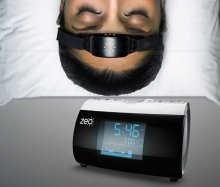

A revolution in personal sleep tracking, the Zeo is a wireless headband that transmits your brainwaves in realtime to a dock (pictured here) or your smartphone. The result? You can wake up and see exactly what stages of sleep you were in during the night! Unprecedented personalized sleep knowledge.
Sleep Paralysis: A Dreamer's Guide

Ever woken up paralyzed? A surprising number of us have, believe it or not. But few know the actual causes of this phenomenon, and fewer still how to exert control over it. Dream researcher and sleep paralysis expert Ryan Hurd shares breakthrough insights into how to do just that.
Important Disclaimer
Please Note:
The information found on this page and throughout this site is intended for general information purposes only. While it may prove useful and empowering, it is NOT intended as a substitute for the expertise and judgments of healthcare practitioners.
For more info, see our
Terms of Use.