
| Connect & Subscribe |
 |
 |
 |
 |
The following is a visitor-submitted question or story. For more, you can submit your own sleep story here, or browse the collection of experiences and questions other visitors have shared here.
Difference Between Delayed Sleep Phase (DSP) & Delayed Sleep Phase Syndrome (DSPS)
An informative article, but it falls into the usual "daywalker" trap that DSPS is caused by poor sleep hygiene and bad habits. It can be, but for a delayed sleep phase to be properly described a "syndrome", a degree of inability to be "normal" should be there. I'm not an expert, but my understanding is that recent studies have shown a genetic propensity to delayed sleep phase in sufferers.
Kevin's Thoughts
Your point is well taken and thank you for sharing it. One thing I want to make clear from the very start in response to your first sentence is that at no time do I make the distinction that "bad" habits cause a delayed sleep phase. We all operate under the influence of different lifestyles and preferences when it comes to sleep time, and in no way did I suggest in the article that a delayed sleep phase is in any way inherently bad. In fact, I believe that quite a large number of people are better suited to a delayed sleep phase than a "normal" sleep phase. There's been many a discovery made in the unorthodox hours of the night by an alert mind operating upon a delayed sleep phase.In his Stanford Sleep Book, Dr. Dement implies that a "delayed sleep phase" becomes "delayed sleep phase syndrome" when the dip in biological clock alerting needed to sleep is delayed beyond the desired time to be asleep.
Under this definition then, someone who wishes to go to bed at 11 PM,
This hypothetical schedule would ultimately lead the individual to experience the range of other symptoms involved with the sleep deprivation that would accumulate. And indeed, the definition of the word "syndrome" itself calls specifically for a group of symptoms that together are characteristic of a condition, rather than an inability to rid oneself of it. And since the symptoms themselves are going to exist in just about anyone who desires an earlier sleep time, regardless of their inherent ability to shift their biological clocks while in a delayed sleep phase, it is more their desire rather than their ability to advance phase that qualifies the word "syndrome".
What do you think of this argument? I'd be curious to know, because it is by no means an absolute or end-all answer, as I imagine there may be various points of view on this distinction even among professionals within the sleep circle. If I find out more about varying views of experts I'll be sure to update this page.
Kevin
Comments for Difference Between Delayed Sleep Phase (DSP) & Delayed Sleep Phase Syndrome (DSPS)
|
||
|
||
|
||
|
||
 Subscribe To Our RSS Feed


About This Site
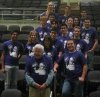
Welcome! This site is continuously being created by students of Dr. William C. Dement's Sleep And Dreams course at Stanford University.
We made this site as a call to action for people all over the world to live healthier, happier, safer, and more productive lives by learning about their own sleep. We have faith that reading the information provided on this site will motivate you to be smart about your sleep deprivation and strategic about your alertness in order to live life to your fullest, most energetic potential.
In fact, we challenge you to do so! What do you say, are you up for the challenge?
Interviews With Sleep Specialists: Insights Into the Worlds of Sleep Medicine & Sleep Business
America's Most Dangerous Disorder: What Is Sleep Apnea Doing To Your Sleep?
Sleep Debt: How Much More Will You Achieve When You Reduce Yours?
The Stages Of Sleep: The Journey Through The Night
Delayed Sleep Phase: You Want To Sleep But You're Not Tired Yet
Paralyzed at Night: Is Sleep Paralysis Normal?
Sleep In Words: Smart, Strange, and Funny Quotes About Sleep
Sleep Disorders In Children: What's Keeping Your Child From A Full Night's Rest?
Attacks of Pavor Nocturnus (a.k.a. Sleep Terrors, Night Terrors, or Incubus Attacks)
A Note On Visitor-Submitted Questions:
Publishing sleep stories and questions from our visitors is meant to create a forum for open and proactive dialogue about an extremely important portion of our lives (one that occupies 1/3 of it and affects the other 2/3) that isn't talked about enough. It is not meant to substitute a trip to the doctor or the advice of a specialist. It's good to talk; it is not good to avoid consulting someone who's profession it is to help you with this kind of stuff.
If you are in any way concerned about your sleep health, don't wait for an answer on here, and don't necessarily rely on them. See a sleep specialist in your area as soon as possible.
The Stanford Sleep Book
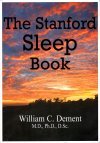
Dr. Dement's pioneering textbook has been the core text for Sleep and Dreams since 1980, but it has just recently been made available to the wider public for the first time.
In it you'll find a more detailed account of the most important things you need to know about sleep, alertness, dreams, and sleep disorders. Studies, statistics, plus plenty of Dr. Dement's classic anecdotes painting the history of sleep medicine.
Preface | Intro | Contents | Get A Copy
More Sleep Resources
The Zeo
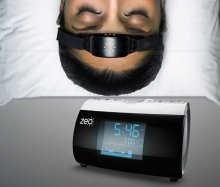

A revolution in personal sleep tracking, the Zeo is a wireless headband that transmits your brainwaves in realtime to a dock (pictured here) or your smartphone. The result? You can wake up and see exactly what stages of sleep you were in during the night! Unprecedented personalized sleep knowledge.
Sleep Paralysis: A Dreamer's Guide
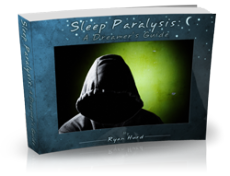
Ever woken up paralyzed? A surprising number of us have, believe it or not. But few know the actual causes of this phenomenon, and fewer still how to exert control over it. Dream researcher and sleep paralysis expert Ryan Hurd shares breakthrough insights into how to do just that.
Important Disclaimer
Please Note:
The information found on this page and throughout this site is intended for general information purposes only. While it may prove useful and empowering, it is NOT intended as a substitute for the expertise and judgments of healthcare practitioners.
For more info, see our
Terms of Use.