
| Connect & Subscribe |
 |
 |
 |
 |
The following is a visitor-submitted question or story. For more, you can submit your own sleep story here, or browse the collection of experiences and questions other visitors have shared here.
DSPS: Genetically Inherited?
by Krishna
(California)
As far back as I can remember, and even further back than that (according to my mother), I have had what seems to be DSPS. As a toddler and small child, my parents would put me to bed and I'd lie there for hours without falling asleep. I used to try to get my older sister to talk to me during those times but, since she "wouldn't" answer, I assumed we'd get in trouble for talking after bedtime. I thought it was a strange routine (going to bed well before sleepiness had set in, lying there in quiet darkness) but as a kid, who was I to argue with it?
It was years before I discovered that my sister had never answered me because, like a normal person, she was asleep. When grammar school began, my mother knew that I was terribly difficult to wake in the mornings but thought I was being unruly, not sleep deprived. It wasn't until I was about 10 years old and talked with my dad that I began to figure out that my sleep pattern wasn't normal.
He had been this way his whole life (a night owl, sleepy in the morning, hard to wake before noon). He declared that I must have gotten it from him. In my adulthood, my behaviors have certainly contributed to the issue, I enjoy the energy I have at night and find myself most productive after 11pm. In fact, the only time in my life I have felt rested and
I'm curious to know if this is only a "disorder" or if this can be an inherited issue. I'd like to "fix" it but, to be perfectly honest, if it weren't for the expectations of the rest of the world, I'd love this schedule.
Kevin: Hey Krishna, thanks a bunch for sharing your experiences and insight here. It's really interesting to get your childhood self's perspective on your delayed sleep phase. What, you mean this isn't normal??
I don't know too much myself whether circadian disorders have genetic components. I'd imagine they would, although I don't know whether or not anyone has found specific evidence for it. I'll turn this one over to our global Internet audience while I search for any answers I can find. Does anyone know anything more on this?
And I can relate to your enjoyment of the delayed phase despite it being outside the social norm. If it's what keeps you functioning optimally, hey, sometimes you shouldn't have to conform to the world. I'd imagine many a genius breakthrough was made in the wee hours of the night by someone working alertly due to a delayed sleep phase. Having one is certainly not inherently bad. It's the schedule that turns it into a menacing sleep deprivation feeder.
Kevin
Comments for DSPS: Genetically Inherited?
|
||
|
||
|
||
|
||
|
||
 Subscribe To Our RSS Feed


About This Site
Welcome! This site is continuously being created by students of Dr. William C. Dement's Sleep And Dreams course at Stanford University.
We made this site as a call to action for people all over the world to live healthier, happier, safer, and more productive lives by learning about their own sleep. We have faith that reading the information provided on this site will motivate you to be smart about your sleep deprivation and strategic about your alertness in order to live life to your fullest, most energetic potential.
In fact, we challenge you to do so! What do you say, are you up for the challenge?
Interviews With Sleep Specialists: Insights Into the Worlds of Sleep Medicine & Sleep Business
America's Most Dangerous Disorder: What Is Sleep Apnea Doing To Your Sleep?
Sleep Debt: How Much More Will You Achieve When You Reduce Yours?
The Stages Of Sleep: The Journey Through The Night
Delayed Sleep Phase: You Want To Sleep But You're Not Tired Yet
Paralyzed at Night: Is Sleep Paralysis Normal?
Sleep In Words: Smart, Strange, and Funny Quotes About Sleep
Sleep Disorders In Children: What's Keeping Your Child From A Full Night's Rest?
Attacks of Pavor Nocturnus (a.k.a. Sleep Terrors, Night Terrors, or Incubus Attacks)
A Note On Visitor-Submitted Questions:
Publishing sleep stories and questions from our visitors is meant to create a forum for open and proactive dialogue about an extremely important portion of our lives (one that occupies 1/3 of it and affects the other 2/3) that isn't talked about enough. It is not meant to substitute a trip to the doctor or the advice of a specialist. It's good to talk; it is not good to avoid consulting someone who's profession it is to help you with this kind of stuff.
If you are in any way concerned about your sleep health, don't wait for an answer on here, and don't necessarily rely on them. See a sleep specialist in your area as soon as possible.
The Stanford Sleep Book
Dr. Dement's pioneering textbook has been the core text for Sleep and Dreams since 1980, but it has just recently been made available to the wider public for the first time.
In it you'll find a more detailed account of the most important things you need to know about sleep, alertness, dreams, and sleep disorders. Studies, statistics, plus plenty of Dr. Dement's classic anecdotes painting the history of sleep medicine.
Preface | Intro | Contents | Get A Copy
More Sleep Resources
The Zeo
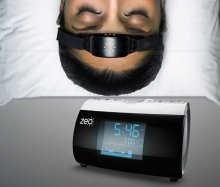

A revolution in personal sleep tracking, the Zeo is a wireless headband that transmits your brainwaves in realtime to a dock (pictured here) or your smartphone. The result? You can wake up and see exactly what stages of sleep you were in during the night! Unprecedented personalized sleep knowledge.
Sleep Paralysis: A Dreamer's Guide
Ever woken up paralyzed? A surprising number of us have, believe it or not. But few know the actual causes of this phenomenon, and fewer still how to exert control over it. Dream researcher and sleep paralysis expert Ryan Hurd shares breakthrough insights into how to do just that.
Important Disclaimer
Please Note:
The information found on this page and throughout this site is intended for general information purposes only. While it may prove useful and empowering, it is NOT intended as a substitute for the expertise and judgments of healthcare practitioners.
For more info, see our
Terms of Use.