
| Connect & Subscribe |
 |
 |
 |
 |
Master Of The Dream World: How The Lucid Dreamer Turns Fantasy Into Reality While Sleeping
Written by Gavin McCourt
"The best thing about dreams is that fleeting moment, when you are between asleep and awake, when you don't know the difference between reality and fantasy, when for just that one moment you feel with your entire soul that the dream is reality, and it really happened."
- -James Arthur Baldwin
Baldwin is talking about that tiny window in time in which the dream world becomes the real world, where the imaginative power of the subconscious merges with the awareness of consciousness to make fantasy seem actual.
You know this moment. It's the one where you wake up from flying swiftly across the snowy peaks of mountaintops; from riding on top of a tiger's back through a tropical rainforest; from being in bed with the really cute girl in your econ class and...
You get the picture. But it's that moment where you are having the most incredible dream and, when you wake up, you swear that it was real. You put your head back on the pillow and concentrate as hard as possible on falling back into this incredible dream only to realize that the dream is gone.
But what if it wasn't? What if during your dream you were able to balance the conscious state with the subconscious state so that you were the master of your dream world? You could go anywhere you wanted to.
In fact, such a thing exists. It is called lucid dreaming.

Dr. D's Sleep Book Says...
"[Lucid dreaming is] the phenomenon by which individuals are conscious of their dream state and may even control the course and scope of their dreams."
More Articles On Lucid Dreaming
What Is Lucid Dreaming? Foundation Article
Inception's Dream Time & An Awesome (Conflicting) Lucid Dreaming Experiment
Lucid Dreaming and Athletics: The Dreamer's Advantage
A lucid dream can occur in two different ways. The first is called a dream-initiated lucid dream (DILD) where, under the pretenses of a normal dream, the dreamer eventually realizes that he or she is dreaming. A lucid dream can also occur as a wake-initiated lucid dream (WILD). Here, the dreamer goes from the waking state (usually after having woken up during the night) straight into a lucid dream with no apparent lapse in consciousness.
Regardless of how a lucid dream is brought about, think of the possibilities. While conscious, we are bound by time and space, by the sensory input that guide our expectations of the world, and the laws of physics that shape those expectations. In the dream world these constraints can dissolve so that anything might be accomplished. Yet, under normal circumstances the dreamer is slave to his or her dream and cannot control the content of events or the way in which they unfold.
Lucid dreaming, though, links the best of each of these worlds, creating, essentially, what can become a consciousness with no bounds.
Dr. D's Sleep Book Says...
"Possible functions of lucid dreaming are fulfilling wishes, exploring alternative choices, improving physical skills, and solving problems."
Furthermore, research has shown that lucid dreaming benefits those who suffer from nightmares insofar as they are able to recognize that they are, in fact, dreaming during the nightmare. This awareness diminishes the frightening aspects of a given situation.
What's more, lucid dreaming is a learnable skill. It seems that anyone who can be aware of his or her dreams with some consistency has the capacity for lucid dreaming, and dream recall is also a trait that can be developed.

 A NovaDreamer offshoot available on Amazon, called the REM Dreamer.
Furthermore, once one can lucid dream, the possibility for increasing the frequency of those lucid dreams exists also. Dr. Stephen LaBerge, founder of the Lucidity Institute, has developed an apparatus known as the "NovaDreamer," a mask that covers the sleeper's eyes with two red light bulbs. The mask detects the onset of Rapid Eye Movement sleep (the period of sleep in which dreaming occurs), causing the red light bulbs to flash. These visual stimuli can manifest themselves into the dream and aid in making an individual aware that he or she is dreaming, introducing the possibility of a lucid dream.
More natural methods for summoning the onset of a lucid dream exist as well, one of these being the notion of reality testing: performing an action when in a dream and verifying whether or not the subsequent results are consistent with those of wakefulness. Like LaBerge's dream light, reality testing enables the dreamer to become aware that he or she is dreaming, and from there the potential to lucid dream is established.
By combining the awareness of wakeful consciousness with the boundless world of dreaming, the lucid dreamer can accomplish virtually anything.
And join the conversation with your own comments here:
blog comments powered by DisqusAre You A Lucid Dreamer Already? Share Your Lucid Dream Stories
Back Up A Step And See Our Foundation Article On Lucid Dreaming
 Subscribe To Our RSS Feed


About This Site

Welcome! This site is continuously being created by students of Dr. William C. Dement's Sleep And Dreams course at Stanford University.
We made this site as a call to action for people all over the world to live healthier, happier, safer, and more productive lives by learning about their own sleep. We have faith that reading the information provided on this site will motivate you to be smart about your sleep deprivation and strategic about your alertness in order to live life to your fullest, most energetic potential.
In fact, we challenge you to do so! What do you say, are you up for the challenge?
Interviews With Sleep Specialists: Insights Into the Worlds of Sleep Medicine & Sleep Business
America's Most Dangerous Disorder: What Is Sleep Apnea Doing To Your Sleep?
Sleep Debt: How Much More Will You Achieve When You Reduce Yours?
The Stages Of Sleep: The Journey Through The Night
Delayed Sleep Phase: You Want To Sleep But You're Not Tired Yet
Paralyzed at Night: Is Sleep Paralysis Normal?
Sleep In Words: Smart, Strange, and Funny Quotes About Sleep
Sleep Disorders In Children: What's Keeping Your Child From A Full Night's Rest?
Attacks of Pavor Nocturnus (a.k.a. Sleep Terrors, Night Terrors, or Incubus Attacks)
The Stanford Sleep Book

Dr. Dement's pioneering textbook has been the core text for Sleep and Dreams since 1980, but it has just recently been made available to the wider public for the first time.
In it you'll find a more detailed account of the most important things you need to know about sleep, alertness, dreams, and sleep disorders. Studies, statistics, plus plenty of Dr. Dement's classic anecdotes painting the history of sleep medicine.
Preface | Intro | Contents | Get A Copy
More Sleep Resources
The Zeo
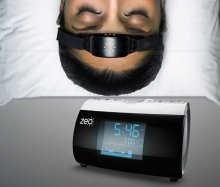

A revolution in personal sleep tracking, the Zeo is a wireless headband that transmits your brainwaves in realtime to a dock (pictured here) or your smartphone. The result? You can wake up and see exactly what stages of sleep you were in during the night! Unprecedented personalized sleep knowledge.
Sleep Paralysis: A Dreamer's Guide
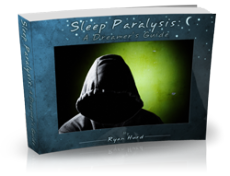
Ever woken up paralyzed? A surprising number of us have, believe it or not. But few know the actual causes of this phenomenon, and fewer still how to exert control over it. Dream researcher and sleep paralysis expert Ryan Hurd shares breakthrough insights into how to do just that.
Important Disclaimer
Please Note:
The information found on this page and throughout this site is intended for general information purposes only. While it may prove useful and empowering, it is NOT intended as a substitute for the expertise and judgments of healthcare practitioners.
For more info, see our
Terms of Use.