
| Connect & Subscribe |
 |
 |
 |
 |
The following is a visitor-submitted question or story. For more, you can submit your own sleep story here, or browse the collection of experiences and questions other visitors have shared here.
Hypersomnia - Can You Sleep Too Much?
I have been told that if a person sleeps too much at one time, say for 12 hours, that they begin to dream too much, and then start burning the energy that they would need the next day. Does this make any sense, and is it true?
Thank you.
Kevin's Thoughts
I'm glad you've asked about this, because it is definitely a commonly held misconception that people can sleep too much, in the basic sense of the phrase.In the vast majority of occasions people sleep an unusually large amount of time (like the 12 hours you mention), they do so because their body calls for them to in order to make up a sleep debt that has been previously accumulated (See this page for a refresher on the concept of sleep debt).
A more detailed explanation of why this is the case and why it is difficult to sleep too much, with a few more terms thrown in, follows below:
Our bodies' desire to sleep is monitored by a homeostatic process (known as the opponent process model, where sleep debt and clock-dependent alerting factors determine whether or not we are able to sleep, or whether or not sleep is helpful). As such, the ability to sleep 12 hours at one time more or less signifies that the body can use at least those 12 hours to restore peak alertness and function, as demonstrated in the example above.
Because of this homeostatic process, biologically speaking it is impossible for most of us to sleep too much. Of course, complications with this can arise when other factors thwart the homeostatic process, such as depression or the extremely rare Kleine-Levin syndrome (also known as Sleeping Beauty syndrome).
But the takeaway point remains that in an otherwise healthy person, it is virtually impossible to sleep too much, from a biological standpoint.
 Subscribe To Our RSS Feed


About This Site
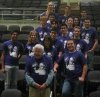
Welcome! This site is continuously being created by students of Dr. William C. Dement's Sleep And Dreams course at Stanford University.
We made this site as a call to action for people all over the world to live healthier, happier, safer, and more productive lives by learning about their own sleep. We have faith that reading the information provided on this site will motivate you to be smart about your sleep deprivation and strategic about your alertness in order to live life to your fullest, most energetic potential.
In fact, we challenge you to do so! What do you say, are you up for the challenge?
Interviews With Sleep Specialists: Insights Into the Worlds of Sleep Medicine & Sleep Business
America's Most Dangerous Disorder: What Is Sleep Apnea Doing To Your Sleep?
Sleep Debt: How Much More Will You Achieve When You Reduce Yours?
The Stages Of Sleep: The Journey Through The Night
Delayed Sleep Phase: You Want To Sleep But You're Not Tired Yet
Paralyzed at Night: Is Sleep Paralysis Normal?
Sleep In Words: Smart, Strange, and Funny Quotes About Sleep
Sleep Disorders In Children: What's Keeping Your Child From A Full Night's Rest?
Attacks of Pavor Nocturnus (a.k.a. Sleep Terrors, Night Terrors, or Incubus Attacks)
A Note On Visitor-Submitted Questions:
Publishing sleep stories and questions from our visitors is meant to create a forum for open and proactive dialogue about an extremely important portion of our lives (one that occupies 1/3 of it and affects the other 2/3) that isn't talked about enough. It is not meant to substitute a trip to the doctor or the advice of a specialist. It's good to talk; it is not good to avoid consulting someone who's profession it is to help you with this kind of stuff.
If you are in any way concerned about your sleep health, don't wait for an answer on here, and don't necessarily rely on them. See a sleep specialist in your area as soon as possible.
The Stanford Sleep Book
Dr. Dement's pioneering textbook has been the core text for Sleep and Dreams since 1980, but it has just recently been made available to the wider public for the first time.
In it you'll find a more detailed account of the most important things you need to know about sleep, alertness, dreams, and sleep disorders. Studies, statistics, plus plenty of Dr. Dement's classic anecdotes painting the history of sleep medicine.
Preface | Intro | Contents | Get A Copy
More Sleep Resources
The Zeo
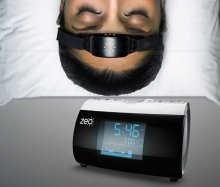

A revolution in personal sleep tracking, the Zeo is a wireless headband that transmits your brainwaves in realtime to a dock (pictured here) or your smartphone. The result? You can wake up and see exactly what stages of sleep you were in during the night! Unprecedented personalized sleep knowledge.
Sleep Paralysis: A Dreamer's Guide
Ever woken up paralyzed? A surprising number of us have, believe it or not. But few know the actual causes of this phenomenon, and fewer still how to exert control over it. Dream researcher and sleep paralysis expert Ryan Hurd shares breakthrough insights into how to do just that.
Important Disclaimer
Please Note:
The information found on this page and throughout this site is intended for general information purposes only. While it may prove useful and empowering, it is NOT intended as a substitute for the expertise and judgments of healthcare practitioners.
For more info, see our
Terms of Use.