
| Connect & Subscribe |
 |
 |
 |
 |
The following is a visitor-submitted question or story. For more, you can submit your own sleep story here, or browse the collection of experiences and questions other visitors have shared here.
I Have It
-Sleep Debt
Forget it. Your body is on a rhythm. Those hours are gone, and you are not going to get them
back.
-Phase advancement
More time spent in bed waiting for your body to get tired.
-Sleeping pills and supplements (such as melatonin)
You'll just relapse as soon as you stop taking them.
The best thing you can do is to just accept your schedule and have everything around you adjust to it. And if they don't, sue 'em. This IS America after all!
No, no, on a more serious note, this is not because you stayed up late one night (like this silly article tells you and what logic may presume.) No, this is usually because of an extreme form of good ol' puberty!
So "Why should I trust you?" you ask? Well, you really shouldn't. But you shouldn't trust these Standford undergrads either! (Refer yourself to figue 9.5: "Party Time") See a sleep specialist. He or she will be able to properly diagnose you and make you feel more confident when you start your new sleep program.
Kevin's Thoughts
Thank you for your submission, but I think you are both rather misinformed and misinterpreting much of our article."...this is not because you stayed up late one night (like this silly article tells you...."
In no way shape or form have we implied that staying up late one night is how one acquires DSPS. This is simply a hyperbole and is not at all honest with the article.
At the same time, you should remain open to the fact that consistent behavior and the time one falls asleep can contribute to a delayed sleep phase, because it most definitely can. The power of behavior in shaping one's circadian rhythms should not be underestimated. In severe and chronic cases of DSPS it is thought that genetic predispositions can also play a role in perpetuating the delayed phase, of course, but to rule out behavior is a grave mistake.
The same goes with ruling out behavior for treatments. Circadian rhythms can be shifted--that's a fact that has been empirically
adjust to it" underestimates the potential of proven treatments and fails to empathize with people to whom this is not much of an option for. Some people need to be able to be alert and functioning optimally during the day, whether it be because they need to care for their children or support their family with their job with the early morning start time.
"But you shouldn't trust these Standford undergrads either! (Refer yourself to figue 9.5: "Party Time")"
This to misinterprets the material. I understand the humor, but the point of the pictures is to demonstrate the effect of clock-dependent alerting in a delayed sleep phase on the mind and body. In the late afternoon, circadian rhythm alerting tends to dip, often leaving the sufferer in a groggy state in a portion of the day where chances for social interaction tend to be high. On the other hand, late at night when the traditional sleeper is already asleep, clock-dependent alerting in a delayed phase will kick start the individuals mind and body, supplying the type of energy one would tend to want to engage in activities such as social interaction, but would certainly not want when trying to obtain sleep.
I hope you better understand the point of the pictures now.
"See a sleep specialist. He or she will be able to properly diagnose you and make you feel more confident when you start your new sleep program."
While seeing a sleep specialist is a sound piece of advice certainly, you fail to recognize that the advice given on our page comes from THE sleep specialist--the man regarded as the father of sleep medicine by any other specialist you talk to (Don't believe me? Ask around.)--Dr. William C. Dement.
While your analysis of our article falls short in its simplicity, I must at least thank you for prodding me to reexamine the DSPS webpage, because upon doing so I did find a few parts that could have been explained more clearly. So if nothing else, the page is at least a bit improved now.
Kevin
Comments for I Have It
|
||
|
||
 Subscribe To Our RSS Feed


About This Site
Welcome! This site is continuously being created by students of Dr. William C. Dement's Sleep And Dreams course at Stanford University.
We made this site as a call to action for people all over the world to live healthier, happier, safer, and more productive lives by learning about their own sleep. We have faith that reading the information provided on this site will motivate you to be smart about your sleep deprivation and strategic about your alertness in order to live life to your fullest, most energetic potential.
In fact, we challenge you to do so! What do you say, are you up for the challenge?
Interviews With Sleep Specialists: Insights Into the Worlds of Sleep Medicine & Sleep Business
America's Most Dangerous Disorder: What Is Sleep Apnea Doing To Your Sleep?
Sleep Debt: How Much More Will You Achieve When You Reduce Yours?
The Stages Of Sleep: The Journey Through The Night
Delayed Sleep Phase: You Want To Sleep But You're Not Tired Yet
Paralyzed at Night: Is Sleep Paralysis Normal?
Sleep In Words: Smart, Strange, and Funny Quotes About Sleep
Sleep Disorders In Children: What's Keeping Your Child From A Full Night's Rest?
Attacks of Pavor Nocturnus (a.k.a. Sleep Terrors, Night Terrors, or Incubus Attacks)
A Note On Visitor-Submitted Questions:
Publishing sleep stories and questions from our visitors is meant to create a forum for open and proactive dialogue about an extremely important portion of our lives (one that occupies 1/3 of it and affects the other 2/3) that isn't talked about enough. It is not meant to substitute a trip to the doctor or the advice of a specialist. It's good to talk; it is not good to avoid consulting someone who's profession it is to help you with this kind of stuff.
If you are in any way concerned about your sleep health, don't wait for an answer on here, and don't necessarily rely on them. See a sleep specialist in your area as soon as possible.
The Stanford Sleep Book

Dr. Dement's pioneering textbook has been the core text for Sleep and Dreams since 1980, but it has just recently been made available to the wider public for the first time.
In it you'll find a more detailed account of the most important things you need to know about sleep, alertness, dreams, and sleep disorders. Studies, statistics, plus plenty of Dr. Dement's classic anecdotes painting the history of sleep medicine.
Preface | Intro | Contents | Get A Copy
More Sleep Resources
The Zeo
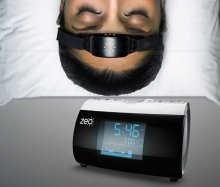

A revolution in personal sleep tracking, the Zeo is a wireless headband that transmits your brainwaves in realtime to a dock (pictured here) or your smartphone. The result? You can wake up and see exactly what stages of sleep you were in during the night! Unprecedented personalized sleep knowledge.
Sleep Paralysis: A Dreamer's Guide
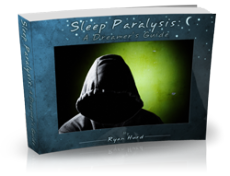
Ever woken up paralyzed? A surprising number of us have, believe it or not. But few know the actual causes of this phenomenon, and fewer still how to exert control over it. Dream researcher and sleep paralysis expert Ryan Hurd shares breakthrough insights into how to do just that.
Important Disclaimer
Please Note:
The information found on this page and throughout this site is intended for general information purposes only. While it may prove useful and empowering, it is NOT intended as a substitute for the expertise and judgments of healthcare practitioners.
For more info, see our
Terms of Use.