
| Connect & Subscribe |
 |
 |
 |
 |
The following is a visitor-submitted question or story. For more, you can submit your own sleep story here, or browse the collection of experiences and questions other visitors have shared here.
Rotating Work Shift and Your Circadian Rhythm
by Patrick
(Hephzibah, Ga., United States)
Ok long story made short. How does this apply to someone who works a rotating/swing shift? Does anyone have a solution for that? Your biological clock and circadian rhythm are more or less permanently thrown into disarray. It is impossible to maintain a normal biological clock and circadian rhythm when you work a rotating shift.
Kevin: Hey Patrick, fantastic question. Thanks for asking it. You're absolutely right to highlight the problems shift workers face with their circadian rhythm. In fact, it's something that has generated a large amount of interest and attention in the field of sleep research, and there is even a conditioned called "Shift Work Sleep Disorder" listed in the International Classification of Sleep Disorders. (Look on this page under Dyssomnias, Circadian Rhythm Disorders, C.2 and you'll see it right there.)
Sleep deprivation associated with shift work is a serious problem in many professions, personally for the workers, productivity-wise for the companies, and safety-wise for the public in some cases. In one study, over 7,000 rotating shift workers in petroleum, chemical, and manufacturing industries were asked whether they had ever fallen asleep on the job. Overall, more than 40% admitted they had one or more times. When divided up by shift time these numbers turned into 62% while on the night shift (approx. 12 a.m. - 8 a.m.), 35% while on the day shift (8 a.m. - 4 p.m.), and 25% while on the swing shift (4 p.m. - 12 a.m.). Interestingly, these numbers match up with biological clock alertness patterns if you have an understanding of how
There are inevitable difficulties built into shift work when it comes to sleep, and there's only so much an individual can do to cope with constantly adjusting if they're on a swing schedule. One of the most promising solutions then, and one that is being realized more and more, stems from the businesses/employers themselves being cognizant of the detriments certain swing/rotating shifts can bring to their employees. Having the businesses learn about and work out the safest, most efficient, and healthiest schedules, and having them see it is in their own self-interest to implement those schedules, is key.
That said, for the individuals themselves who are working these types of shifts, it is so important to learn about and have a good understanding of their own biological clock and how it is influenced.
I've been working on getting an article on shift work and sleep up on the site to get into more detail about this. I have some writing already done for it, but it's going to take a bit more polishing before it goes up. I'll update this page with a link when it's ready.
Thanks again for the question Patrick. Are you a shift worker yourself, or just curious?
Kevin
Comments for Rotating Work Shift and Your Circadian Rhythm
|
||
|
||
|
||
 Subscribe To Our RSS Feed


About This Site

Welcome! This site is continuously being created by students of Dr. William C. Dement's Sleep And Dreams course at Stanford University.
We made this site as a call to action for people all over the world to live healthier, happier, safer, and more productive lives by learning about their own sleep. We have faith that reading the information provided on this site will motivate you to be smart about your sleep deprivation and strategic about your alertness in order to live life to your fullest, most energetic potential.
In fact, we challenge you to do so! What do you say, are you up for the challenge?
Interviews With Sleep Specialists: Insights Into the Worlds of Sleep Medicine & Sleep Business
America's Most Dangerous Disorder: What Is Sleep Apnea Doing To Your Sleep?
Sleep Debt: How Much More Will You Achieve When You Reduce Yours?
The Stages Of Sleep: The Journey Through The Night
Delayed Sleep Phase: You Want To Sleep But You're Not Tired Yet
Paralyzed at Night: Is Sleep Paralysis Normal?
Sleep In Words: Smart, Strange, and Funny Quotes About Sleep
Sleep Disorders In Children: What's Keeping Your Child From A Full Night's Rest?
Attacks of Pavor Nocturnus (a.k.a. Sleep Terrors, Night Terrors, or Incubus Attacks)
A Note On Visitor-Submitted Questions:
Publishing sleep stories and questions from our visitors is meant to create a forum for open and proactive dialogue about an extremely important portion of our lives (one that occupies 1/3 of it and affects the other 2/3) that isn't talked about enough. It is not meant to substitute a trip to the doctor or the advice of a specialist. It's good to talk; it is not good to avoid consulting someone who's profession it is to help you with this kind of stuff.
If you are in any way concerned about your sleep health, don't wait for an answer on here, and don't necessarily rely on them. See a sleep specialist in your area as soon as possible.
The Stanford Sleep Book

Dr. Dement's pioneering textbook has been the core text for Sleep and Dreams since 1980, but it has just recently been made available to the wider public for the first time.
In it you'll find a more detailed account of the most important things you need to know about sleep, alertness, dreams, and sleep disorders. Studies, statistics, plus plenty of Dr. Dement's classic anecdotes painting the history of sleep medicine.
Preface | Intro | Contents | Get A Copy
More Sleep Resources
The Zeo
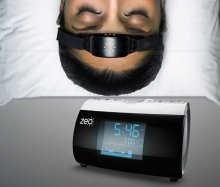

A revolution in personal sleep tracking, the Zeo is a wireless headband that transmits your brainwaves in realtime to a dock (pictured here) or your smartphone. The result? You can wake up and see exactly what stages of sleep you were in during the night! Unprecedented personalized sleep knowledge.
Sleep Paralysis: A Dreamer's Guide
Ever woken up paralyzed? A surprising number of us have, believe it or not. But few know the actual causes of this phenomenon, and fewer still how to exert control over it. Dream researcher and sleep paralysis expert Ryan Hurd shares breakthrough insights into how to do just that.
Important Disclaimer
Please Note:
The information found on this page and throughout this site is intended for general information purposes only. While it may prove useful and empowering, it is NOT intended as a substitute for the expertise and judgments of healthcare practitioners.
For more info, see our
Terms of Use.