
| Connect & Subscribe |
 |
 |
 |
 |
What Causes Sleepiness?
An Outreach Project by Albert Pak, Exeter Alumnus, Spring 2010 | Return To Outreach Projects 2010
Hello, Exeter! Greetings from sunny California.
Many of you will remember Dr. James Maas's lecture from about a year ago. He talked about the importance of sleep and the irrationality of holding classes at 8 in the morning, among other sleep-related topics.
As fascinating as his lecture was, however, it left me largely skeptical and confused. So, in the hopes of finding answers to some of the questions I had, I recently took a course called Sleep and Dreams, taught by Dr. William C. Dement (Google him--he's kind of a big deal).
The course addressed many aspects of sleep--from sleep disorders to lucid dreaming to night-time penile erection. But most of those topics probably don't interest Exonians, certainly not penile erections.
So I want to talk about something that affects you every day--sleepiness.
It turns out that there are three factors that influence how sleepy you feel: how much sleep debt you have, what time of the day it is, and how stimulated you are. Instead of trying to give a cursory explanation of each of the three factors, I will focus on exploring sleep debt.
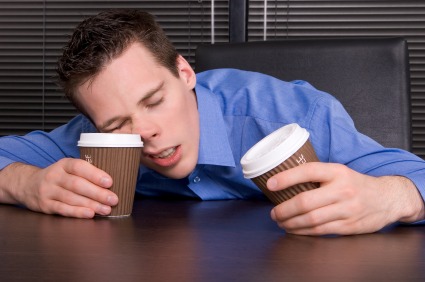
The general maxim is this: the more sleep debt you have, the sleepier you will feel. And sleep debt accumulates every time you sleep less than your individual sleep requirement. For example, if I need 8 hours of sleep each night, but slept an average of 6 hours a night over one week, I will have 14 hours of sleep debt. That's simple enough, but also prompts several questions.
First, how do you even objectively measure sleepiness, which seems to be an inherently subjective concept?
It turns out that there is a test called Multiple Sleep Latency Test (MSLT) which has been very reliable. I will not go into the specifics of the test, but you can always Google it if you want to. What's important for the current purposes is that MSLT provides researchers with an accurate method to measure sleepiness.
Second, how much sleep do you need every day in order to be fully alert?
It depends. Most people require around 8 hours, but some people can get by with far less. So how do you find out what your individual requirement is?
Well, ideally, if you were in a sleep laboratory, you could get an initial test for sleepiness (through MSLT), sleep for, let's say, 7 hours, and then get retested for sleepiness (through MSLT). If your sleepiness decreased, you now know that you need less than 7 hours of sleep each night; if your sleepiness increased, you now know that you need more than 7 hours of sleep each night. It's easy to see how one could accurately measure sleep need by repeating this process.
But, unfortunately, most of us don't have sleep laboratories in our closets. So I propose the following: keep a sleep journal. Record the number of hours you sleep each night, record any naps if applicable, and record your subjective level of alertness. Do this for a few weeks. Then, you will be able to estimate how much sleep you need.
Third, can sleep debt ever go away?
There seems to be an urban legend that, if you just ignore your sleep debt for a long time, it will go away. Is that true?
Unfortunately, current research cannot answer that question. It is deemed unethical to test the hypothesis by having people purposefully sleep-deprived for longer than a few weeks. However, there have been studies that establish near-conclusively that sleep debt accumulates for at least two weeks.
Fourth, what is the exact biological process through which sleep debt is recorded in your body?
Again, unfortunately, current research cannot answer that question. Studies only show empirically that sleep debt accumulates over time, for at least as long as two weeks, and that the more sleep debt you have, the sleepier you will feel. But how our bodies keep track of sleep debt is still a mystery.
Now I just want to quickly talk about the other two factors that influence sleepiness: the time of day and stimulation.
One can intuitively see how the time of day will affect one's sleepiness. In the evenings and mornings, many of us typically feel more alert than in the afternoons and during nights. Studies show that our biological clocks alert us in the mornings and in the evenings, but not in the afternoons. That explains why we feel so sleepy early in the afternoon. It's not because of the big lunches or the warm sunlight, it's because there is no internal alerting to counteract our sleep debt.
And, amazingly, sleep researchers have identified a specific area in our brain called the suprachiasmatic nucleus (SCN) that is responsible for keeping our biological clock. How do we know that? We have seen what happens in the absence of SCN--at least in rats. SCN-less rats go to sleep and wake up in short intervals, completely out of sync with the 24-hour day.
The last factor that influences sleepiness is stimulation. It turns out that the SCN-less rats could be kept awake by external stimulation, despite their accumulating sleep debt. But as sleep debt kept increasing, researchers had to take more and more extreme measures to keep the rats awake. And, after a while, for ethical reasons, they had to stop upping the ante.
I think that the last point provides a good ending point. When I was at Exeter, I went through all kinds of tricks to keep myself awake at night. But beyond a certain point, sleep debt will take control of your body. That could happen during your E format class. That could happen when you're desperately trying to finish your 333 or your meditation. Or, worst of all, that could happen when you're behind the wheel. Don't let that happen to you. Just get some sleep.
 Subscribe To Our RSS Feed


About This Site

Welcome! This site is continuously being created by students of Dr. William C. Dement's Sleep And Dreams course at Stanford University.
We made this site as a call to action for people all over the world to live healthier, happier, safer, and more productive lives by learning about their own sleep. We have faith that reading the information provided on this site will motivate you to be smart about your sleep deprivation and strategic about your alertness in order to live life to your fullest, most energetic potential.
In fact, we challenge you to do so! What do you say, are you up for the challenge?
Interviews With Sleep Specialists: Insights Into the Worlds of Sleep Medicine & Sleep Business
America's Most Dangerous Disorder: What Is Sleep Apnea Doing To Your Sleep?
Sleep Debt: How Much More Will You Achieve When You Reduce Yours?
The Stages Of Sleep: The Journey Through The Night
Delayed Sleep Phase: You Want To Sleep But You're Not Tired Yet
Paralyzed at Night: Is Sleep Paralysis Normal?
Sleep In Words: Smart, Strange, and Funny Quotes About Sleep
Sleep Disorders In Children: What's Keeping Your Child From A Full Night's Rest?
Attacks of Pavor Nocturnus (a.k.a. Sleep Terrors, Night Terrors, or Incubus Attacks)
The Stanford Sleep Book

Dr. Dement's pioneering textbook has been the core text for Sleep and Dreams since 1980, but it has just recently been made available to the wider public for the first time.
In it you'll find a more detailed account of the most important things you need to know about sleep, alertness, dreams, and sleep disorders. Studies, statistics, plus plenty of Dr. Dement's classic anecdotes painting the history of sleep medicine.
Preface | Intro | Contents | Get A Copy
More Sleep Resources
The Zeo
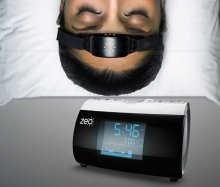

A revolution in personal sleep tracking, the Zeo is a wireless headband that transmits your brainwaves in realtime to a dock (pictured here) or your smartphone. The result? You can wake up and see exactly what stages of sleep you were in during the night! Unprecedented personalized sleep knowledge.
Sleep Paralysis: A Dreamer's Guide
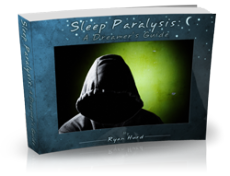
Ever woken up paralyzed? A surprising number of us have, believe it or not. But few know the actual causes of this phenomenon, and fewer still how to exert control over it. Dream researcher and sleep paralysis expert Ryan Hurd shares breakthrough insights into how to do just that.
Important Disclaimer
Please Note:
The information found on this page and throughout this site is intended for general information purposes only. While it may prove useful and empowering, it is NOT intended as a substitute for the expertise and judgments of healthcare practitioners.
For more info, see our
Terms of Use.