
| Connect & Subscribe |
 |
 |
 |
 |
What Teens Should Know About Sleep
An Outreach Project by Jonathan Hsieh | Return To Outreach Projects 2010
We've all done it. Whether it was staying up late to work on a project for an upcoming deadline, going to sleep at 4 A.M. because we wanted to catch some late-night television, or even just staying up for no good apparent reason on weekdays- all of us are used to depriving ourselves of sleep. Yet, we never really stop to think about what we are really doing to our bodies; we just spend our weekends playing catch-up on sleep and assume that everything is perfectly fine.
One thing that students have to remember is that the average teenager requires on average about nine to ten hours per night; while the exact amount of sleep required varies from person to person, all of the lost sleep accumulates into a debt that must eventually be paid back. Just to spell it out: if you need nine hours of sleep per night, and you only sleep for seven hours the entire week- you have accumulated a sleep debt of fourteen hours. Those fourteen hours (along with your previous sleep debt) must be eventually made up, and the only way to get rid of your sleep debt is to catch up on sleep.
It is important to remember these facts about sleep and sleep debt, as there are many misconceptions believed by the general public. There is this belief that it is possible to get too much sleep, as people sometimes have person experiences where they wake up after a long night of sleep and end up feeling more tired than they did beforehand. While people may complain after one night of feeling such effects, these effects largely disappear after a second night of sleep . The truth is that it is impossible for your body to get too much sleep; reasons for people feeling worse after sleeping include dehydration, stiffness from lying down for prolonged amounts of time, or even a large sleep debt.
Knowledge about sleep debt is not pervasive in mainstream knowledge, but its effects are incredibly significant in our society as its implications have wide-ranging, consequential effects. The larger the sleep debt a person possesses, the more a person will be affected by impairment in memory, reaction time, mood, attention, judgment, and learning. A built-up sleep debt can affect everyday functions from grades in school to athletic performance. Studies have shown that students that received A's averaged more sleep than students who averaged B's and C's, even in increments of only a few minutes . Also, scientific studies have proven that athletic activities such as swimming times and basketball shots improve with a lowered sleep debt .
One of our body's methods of telling us about our sleep debt is our sense of drowsiness. Drowsiness means that we are able to fall asleep at any time, which can be extremely hazardous. Sometimes people who are drowsy experience micro-sleeps, short moments where they are unknowingly asleep and where all of their senses of perception are cut off . One thing that people must remember is that it is extremely dangerous, especially during potentially dangerous activities such as driving, with extensive drowsiness or microsleeps, people are unable to respond to danger. Drowsiness due to sleep debt is a major cause of car accidents, as drivers are unable to react to danger. Thus, drowsiness is an indicator that you should stop any potentially dangerous activity such as driving; getting off the road and staying safe are better than being involved in a potentially fatal accident.
So what can we do? Sometimes it can be near impossible for us to keep a regular sleep schedule and get all of the sleep that our body requires due to expectations from work, school work, or just social activities. One thing is to take advantage of this knowledge and realize that we have to make up our sleep debt because it does not go away. Getting our necessary hours of sleep every night and being aware of what our drowsiness actually means can help us live more healthfully and safely. We shouldn't look down on taking short naps, as even short naps can help our alertness and functioning. By understanding our body and its sleep requirements, we can stay healthy individuals functioning at the peak of our potentials.
Dement, William. "Sleep and Dreams." Class Lecture. Stanford University, Stanford, CA. Feb. 2010. Lecture.
Return To Outreach Projects 2010
Go from What Teens Should Know About Sleep to Important Info on Sleep Debt
 Subscribe To Our RSS Feed


About This Site

Welcome! This site is continuously being created by students of Dr. William C. Dement's Sleep And Dreams course at Stanford University.
We made this site as a call to action for people all over the world to live healthier, happier, safer, and more productive lives by learning about their own sleep. We have faith that reading the information provided on this site will motivate you to be smart about your sleep deprivation and strategic about your alertness in order to live life to your fullest, most energetic potential.
In fact, we challenge you to do so! What do you say, are you up for the challenge?
Interviews With Sleep Specialists: Insights Into the Worlds of Sleep Medicine & Sleep Business
America's Most Dangerous Disorder: What Is Sleep Apnea Doing To Your Sleep?
Sleep Debt: How Much More Will You Achieve When You Reduce Yours?
The Stages Of Sleep: The Journey Through The Night
Delayed Sleep Phase: You Want To Sleep But You're Not Tired Yet
Paralyzed at Night: Is Sleep Paralysis Normal?
Sleep In Words: Smart, Strange, and Funny Quotes About Sleep
Sleep Disorders In Children: What's Keeping Your Child From A Full Night's Rest?
Attacks of Pavor Nocturnus (a.k.a. Sleep Terrors, Night Terrors, or Incubus Attacks)
The Stanford Sleep Book
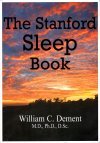
Dr. Dement's pioneering textbook has been the core text for Sleep and Dreams since 1980, but it has just recently been made available to the wider public for the first time.
In it you'll find a more detailed account of the most important things you need to know about sleep, alertness, dreams, and sleep disorders. Studies, statistics, plus plenty of Dr. Dement's classic anecdotes painting the history of sleep medicine.
Preface | Intro | Contents | Get A Copy
More Sleep Resources
The Zeo
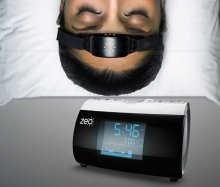

A revolution in personal sleep tracking, the Zeo is a wireless headband that transmits your brainwaves in realtime to a dock (pictured here) or your smartphone. The result? You can wake up and see exactly what stages of sleep you were in during the night! Unprecedented personalized sleep knowledge.
Sleep Paralysis: A Dreamer's Guide
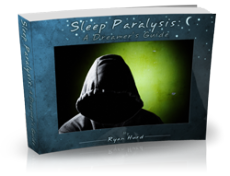
Ever woken up paralyzed? A surprising number of us have, believe it or not. But few know the actual causes of this phenomenon, and fewer still how to exert control over it. Dream researcher and sleep paralysis expert Ryan Hurd shares breakthrough insights into how to do just that.
Important Disclaimer
Please Note:
The information found on this page and throughout this site is intended for general information purposes only. While it may prove useful and empowering, it is NOT intended as a substitute for the expertise and judgments of healthcare practitioners.
For more info, see our
Terms of Use.