
| Connect & Subscribe |
 |
 |
 |
 |
The following is a visitor-submitted question or story. For more, you can submit your own sleep story here, or browse the collection of experiences and questions other visitors have shared here.
Sleep And Jet Lag Strategies
by Christopher
(United Kingdom)
What advice would you give to those whose sleep is affected by jet lag? More importantly, how would you define jet lag?
Kevin's Response
Hey Christopher, great questions. I'll start with a definition of jet lag and work from there.Essentially what jet lag is from a biological point of view is a disagreement between the body's circadian rhythms (which controls the release of the chemicals that govern when we are tired and alert) and the time in the day. However, this definition could also describe what happens in circadian rhythm sleep disorders, such as delayed sleep phase syndrome, so there must be a bit more to our definition of jet lag. And indeed the word "jet" itself implies travel that has induced this circadian rhythm disagreement with a rapid shift in environmental time.
So one can define jet lag as a desynchronization between the body's circadian rhythms and the time of day, brought about by a rapid shift in environmental time during travel to a new time zone.
As far as advice goes on adjusting to jet lag, there are a couple key things that from my experience that work the best.
The first is bright light treatment. The basic idea behind this treatment is that strategic exposure to bright light can help shift your biological clock. This bright light can be the sunshine outside your window telling your brain it is morning, orrr it can be a specially made box of fluorescent lights you shine into your periphery at preplanned times to help you to adjust to, say, a future date of travel (learn a bit more about bright light treatment here). Which brings me to my next point...
The second involves preparation. If I know my outside environment is about to shift, say, 8 hours ahead, I don't have to wait until I'm in the foreign country to start shifting my circadian rhythms. I can start at home, either by gradually shifting myself forward over the course of a week or so before the trip, or if there's no time for that by going for the sleep debt technique the night before the flight. I'll illustrate this last part with a recent personal example:
I just returned this past Thursday from a month-and-a-half-long trip to Europe (I'm from the United States). My initial flight was from California to England (with a connection in Dallas, Texas), a difference of 8 hours. Additionally, I was under the quite common travel abroad scenario where I had to be alert and ready to go early the morning after my travels--a 7 AM wake up
Sleep Debt...For Good, Not Evil?
While the accumulation of sleep debt at night is typically a bad thing, it doesn't always have to be. We can use the power of the debt for good too, such as when we want to shift our biological clock. Oh, just when we thought we had it all figured out...
Once I made it to my Dallas flight, which was the long 10 hour haul over the Atlantic, I took a single sleeping pill and let my sleep debt take over. I got around 6 or 7 hours of sleep on the flight, but the key ingredient was this: all that sleep took place while it was night time in England. The plane left at 1 PM PST, which translates to 9 PM in England. When I awoke and we had landed it was morning in England and I had just finished a decently full night's sleep, pretty well prepared to be up for the rest of that day's daylight in order to fall asleep as soon as nighttime hit so I could wake up that next morning fully rested.
These are just two practical morsels of thought for you. There are plenty of other ideas out there for dealing with jet lag--some of them complete duds. One other thing I want to leave you with though:
Much of what I know about jet lag and other practical alertness-improving techniques comes from the experience and research of a guy named Mark Rosekind, who was recently sworn in as a member of the National Transportation safety board (learn a bit more about Dr. Rosekind here). Among his many projects, he runs a website called Alertness-Solutions.com and you can find some more good resources about jet lag adjustments on there. In fact, here's a nice little jet lag chart that can help you plan your preparations strategically.
Kevin
P.S. If anyone else has any jet lag strategies, feel free to use the "Post Comments" link below!
 Subscribe To Our RSS Feed


About This Site

Welcome! This site is continuously being created by students of Dr. William C. Dement's Sleep And Dreams course at Stanford University.
We made this site as a call to action for people all over the world to live healthier, happier, safer, and more productive lives by learning about their own sleep. We have faith that reading the information provided on this site will motivate you to be smart about your sleep deprivation and strategic about your alertness in order to live life to your fullest, most energetic potential.
In fact, we challenge you to do so! What do you say, are you up for the challenge?
Interviews With Sleep Specialists: Insights Into the Worlds of Sleep Medicine & Sleep Business
America's Most Dangerous Disorder: What Is Sleep Apnea Doing To Your Sleep?
Sleep Debt: How Much More Will You Achieve When You Reduce Yours?
The Stages Of Sleep: The Journey Through The Night
Delayed Sleep Phase: You Want To Sleep But You're Not Tired Yet
Paralyzed at Night: Is Sleep Paralysis Normal?
Sleep In Words: Smart, Strange, and Funny Quotes About Sleep
Sleep Disorders In Children: What's Keeping Your Child From A Full Night's Rest?
Attacks of Pavor Nocturnus (a.k.a. Sleep Terrors, Night Terrors, or Incubus Attacks)
A Note On Visitor-Submitted Questions:
Publishing sleep stories and questions from our visitors is meant to create a forum for open and proactive dialogue about an extremely important portion of our lives (one that occupies 1/3 of it and affects the other 2/3) that isn't talked about enough. It is not meant to substitute a trip to the doctor or the advice of a specialist. It's good to talk; it is not good to avoid consulting someone who's profession it is to help you with this kind of stuff.
If you are in any way concerned about your sleep health, don't wait for an answer on here, and don't necessarily rely on them. See a sleep specialist in your area as soon as possible.
The Stanford Sleep Book

Dr. Dement's pioneering textbook has been the core text for Sleep and Dreams since 1980, but it has just recently been made available to the wider public for the first time.
In it you'll find a more detailed account of the most important things you need to know about sleep, alertness, dreams, and sleep disorders. Studies, statistics, plus plenty of Dr. Dement's classic anecdotes painting the history of sleep medicine.
Preface | Intro | Contents | Get A Copy
More Sleep Resources
The Zeo
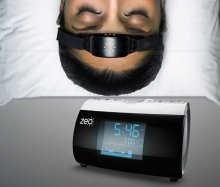

A revolution in personal sleep tracking, the Zeo is a wireless headband that transmits your brainwaves in realtime to a dock (pictured here) or your smartphone. The result? You can wake up and see exactly what stages of sleep you were in during the night! Unprecedented personalized sleep knowledge.
Sleep Paralysis: A Dreamer's Guide

Ever woken up paralyzed? A surprising number of us have, believe it or not. But few know the actual causes of this phenomenon, and fewer still how to exert control over it. Dream researcher and sleep paralysis expert Ryan Hurd shares breakthrough insights into how to do just that.
Important Disclaimer
Please Note:
The information found on this page and throughout this site is intended for general information purposes only. While it may prove useful and empowering, it is NOT intended as a substitute for the expertise and judgments of healthcare practitioners.
For more info, see our
Terms of Use.